

Creature Feature
The world is dense with lifeforms which, in a manner of speaking, are our kin (⋮Knowhere Knewsletter, May 2026).
The epic Mahabharata, which has been one of the most powerful influences throughout the history of India, and arguably, in the history of the world, opens with an anecdote of injustice: a powerful king and his companions mistreat an innocent puppy, and are cursed by its mother. This leads to great misfortune for this king, but also brings humility. And after tens of thousands of verses, the epic ends with an anecdote of justice: a king chooses to reject heaven itself rather than abandon a dog who had followed him all the way in his journey towards the afterlife.

What does that teach us? Treat dogs well. Treat animals with compassion. The lives and feelings of animals are to be valued. And how we interact with animals has profound consequences.
When we started Knowhere Travel Company, a number of factors were at play. One of these threads was that we felt moved by the incredible cultural and ecological divearsity around us, and we wanted to be able to steward that experience for people in a gentle, sustainable way. And in this journey, we often speak about people, communities, cultures, and even ecology in a broad way—and they do need a lot of love and attention—but perhaps one thing we haven’t spoken about as much is the lives of other non-human beings that we encounter constantly, and how nourishing, heartwarming, and even humbling these experiences can be.
The spaces catered to by Knowhere Travel Company makes in possible to get away from the increasingly dense concrete jungles of urban humanity and have slow, reflective interactions with many different kinds of lifeforms, but these threads have perhaps always existed, pulling us to recognise the great, interconnected web of life.
In fact, from the earliest days of the Knowhere Travel Company, we have always advocated for the exploration of backyard biodiversity.
The engagement with life in countless forms can start wherever one lives…


…and it can extend to any places that one travels to…


…and beyond.
Mayra’s Musings
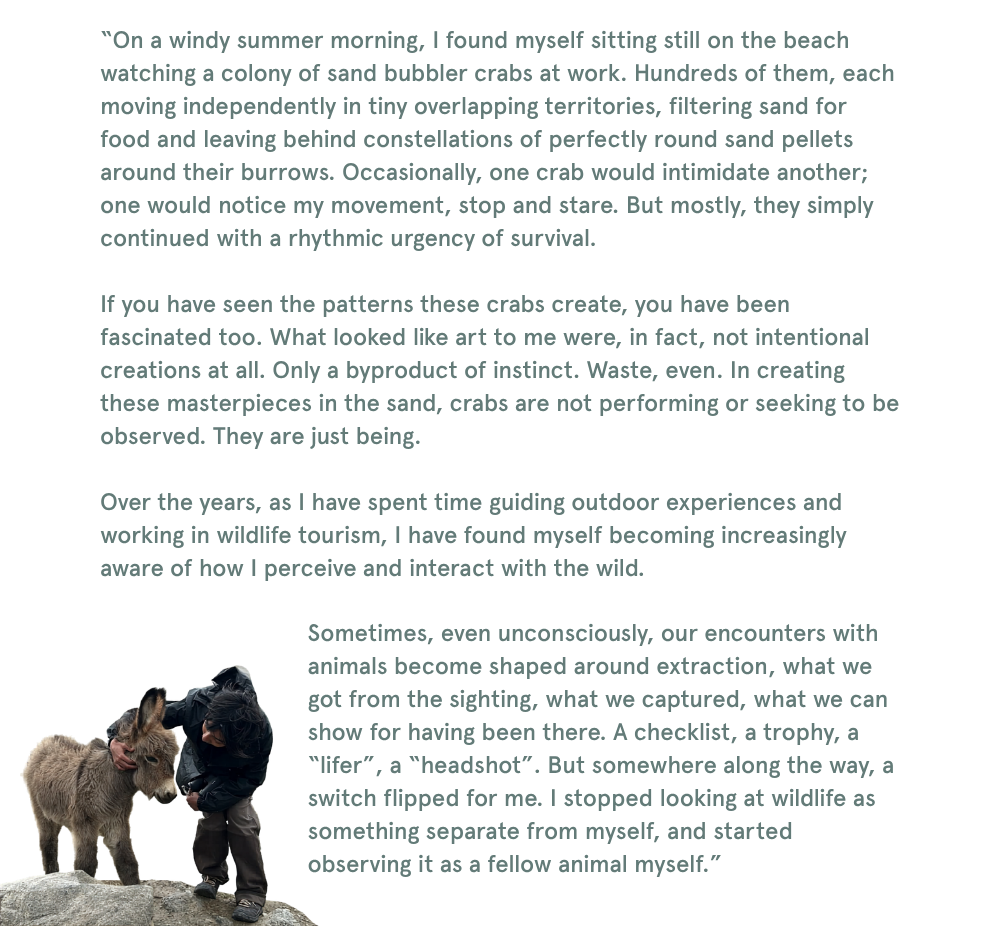
Mayra adds that when one starts observing wildlife not as a human but as another animal, one becomes more aware of reading their behaviours, instincts, adaptations, cooperation, caution, play, fear, and survival. One notices the way a squirrel chooses fruit, the patience of a stalking lizard, the negotiations between ants, the beauty of murmurations... Patterns of order drawn out of chaos.
It’s a reminder that beneath all our systems, performances, ambitions, and constructed identities, we are still organisms learning how to move through an ecosystem. Still governed by instinct, emotion, adaptation, and survival.
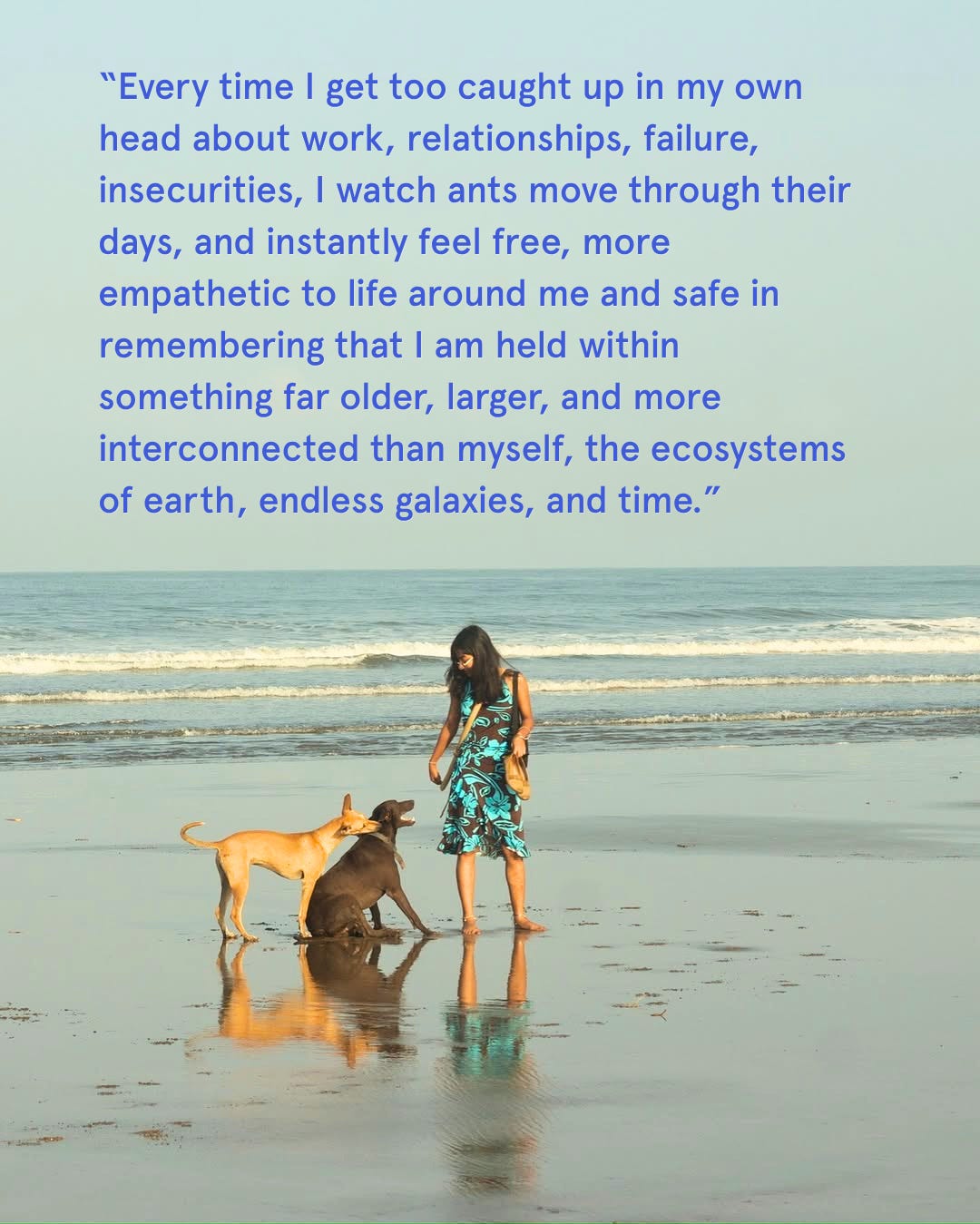
One of the most powerful feelings there is the awareness that you are within a wild ecosystem, whether or not you seek it out. You hear elephants in the distance, come across fresh tracks near camp, and you are now simply another organism moving through a much larger living system. It removes the need to seek wildlife performatively or as proof of experience.
Equanimous extraction
A lot of our friends, colleagues, and collaborators belong to some of the most remote tribes in India.
The tribal view of wilderness and life around is less idyllic and more driven by real needs and fears, and guided by visceral instincts. These are communities that still hunt, but there is a fundamental difference between us, who perform large-scale detached resource extraction simply by being part of urban systems, and someone from a tribal village who has to acquire the resources in modest amounts with their own hands.
A hunter in this context, for example, spends days living in the forest, tracking, identifying a bird and ritualistically pays respect to the forest for its sacrifice after.
For instance, during a recent walk on the wild trails of Arunachal Pradesh with Agur Litin, one of our key partners, and the local boys, we realised that they knew the regional names and calls of nearly every bird species we encountered. Some of these include tahik momta (yellow-bellied fantail), mobeng (black bulbul), nargong, (whitecrested laughing thrush), higo pereng (white-crowned forktail), and benong (whistling thrush).
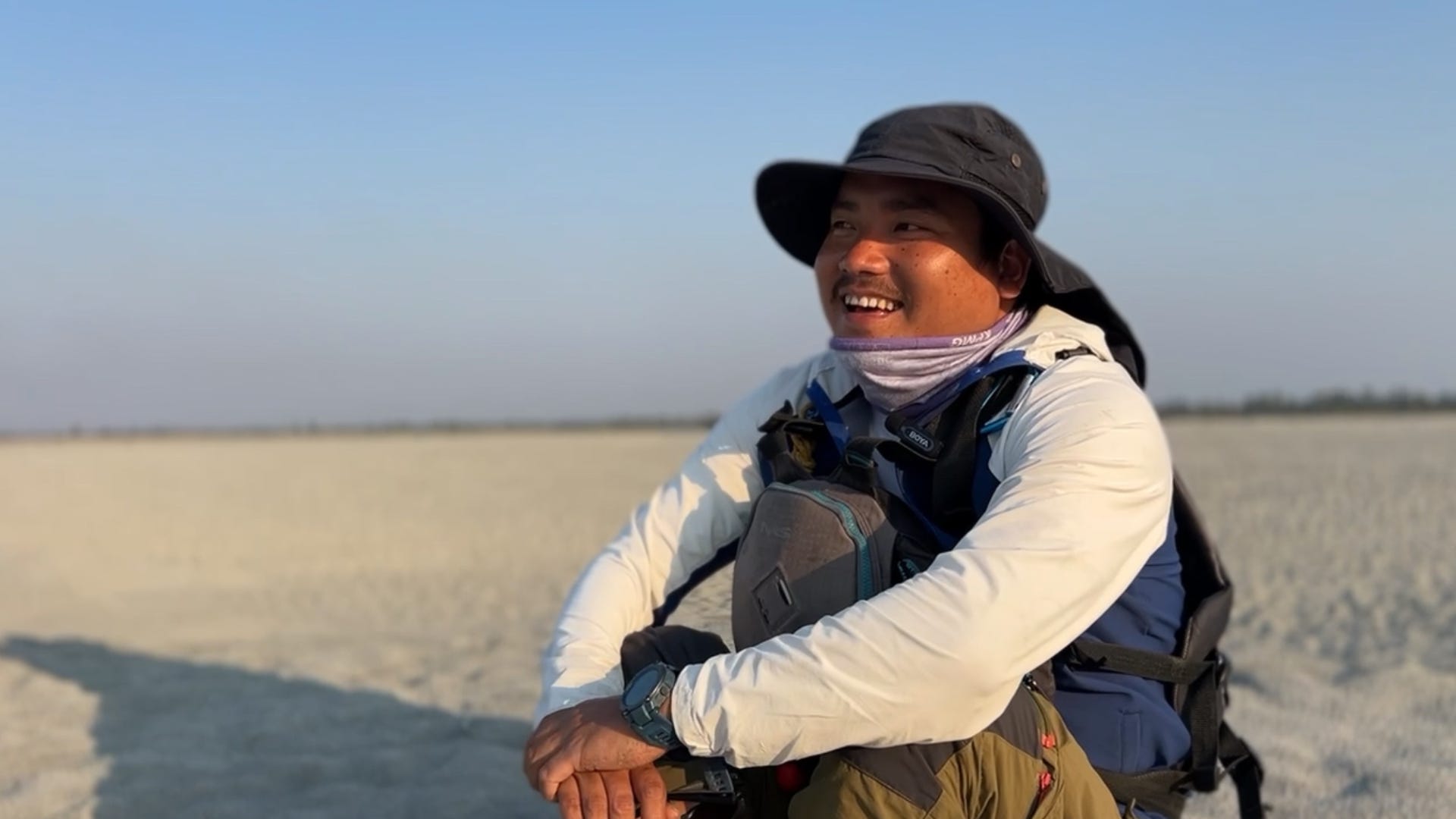
Not just proximity to animals, but the relationship with animals is as relevant to tribal and rural people of today as it was in the epics of ancient times. For example, many tribes in Arunachal Pradesh have deep taboos against hunting tigers. In fact, some tribes, such as the Idu-Mishmi, believe that tigers and humans are brothers, and this belief plays into how the community protect the tigers and their habitats in a very organic way that is integrated into the culture and lifestyle.
Sometimes, there’s no hunting, just appreciation…
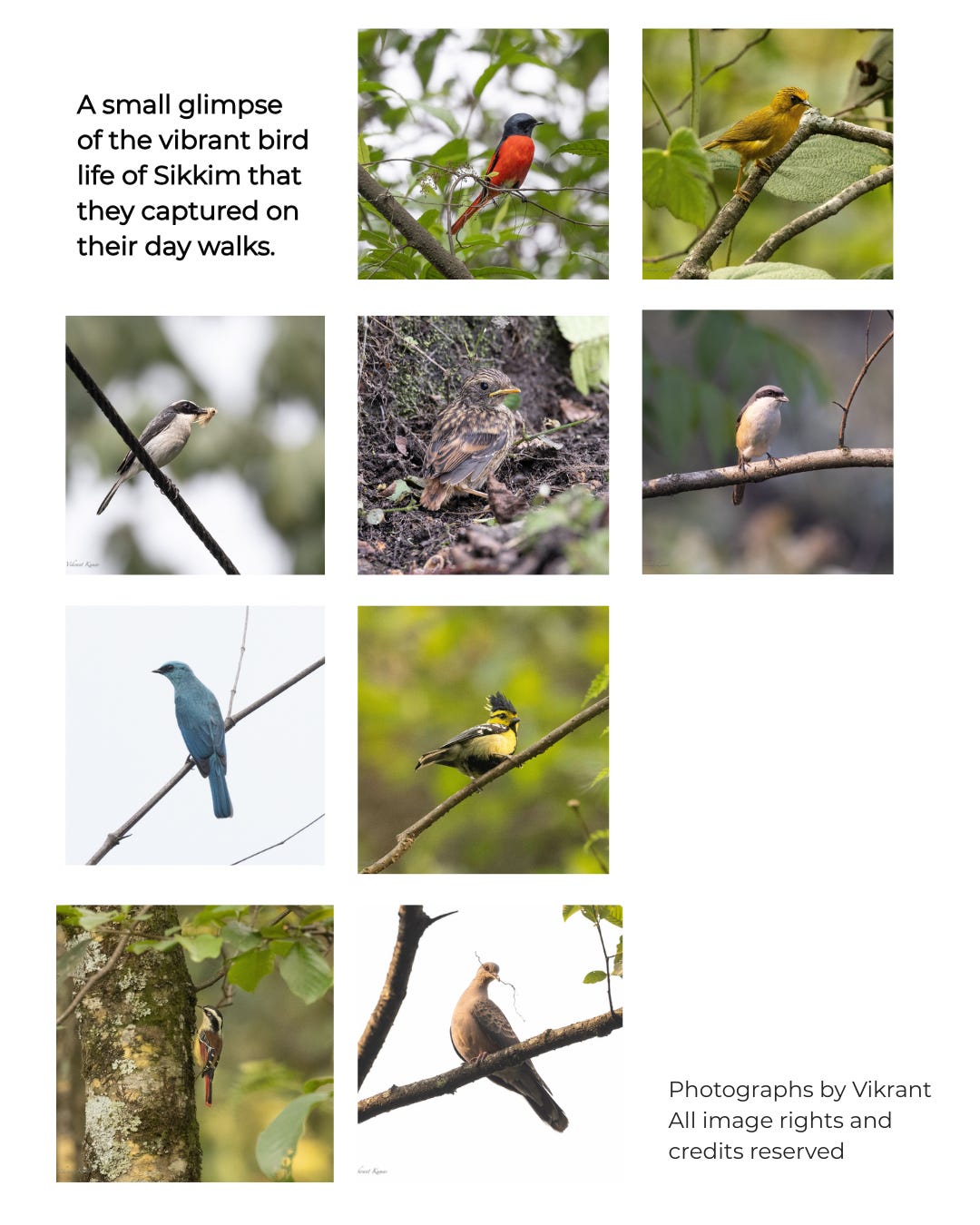
Khim Ji, one of our amazing walking holiday guides, is a pro when it comes to spotting birds... We are always glad to have him and his insights and stories on our journeys.
All things great and small…
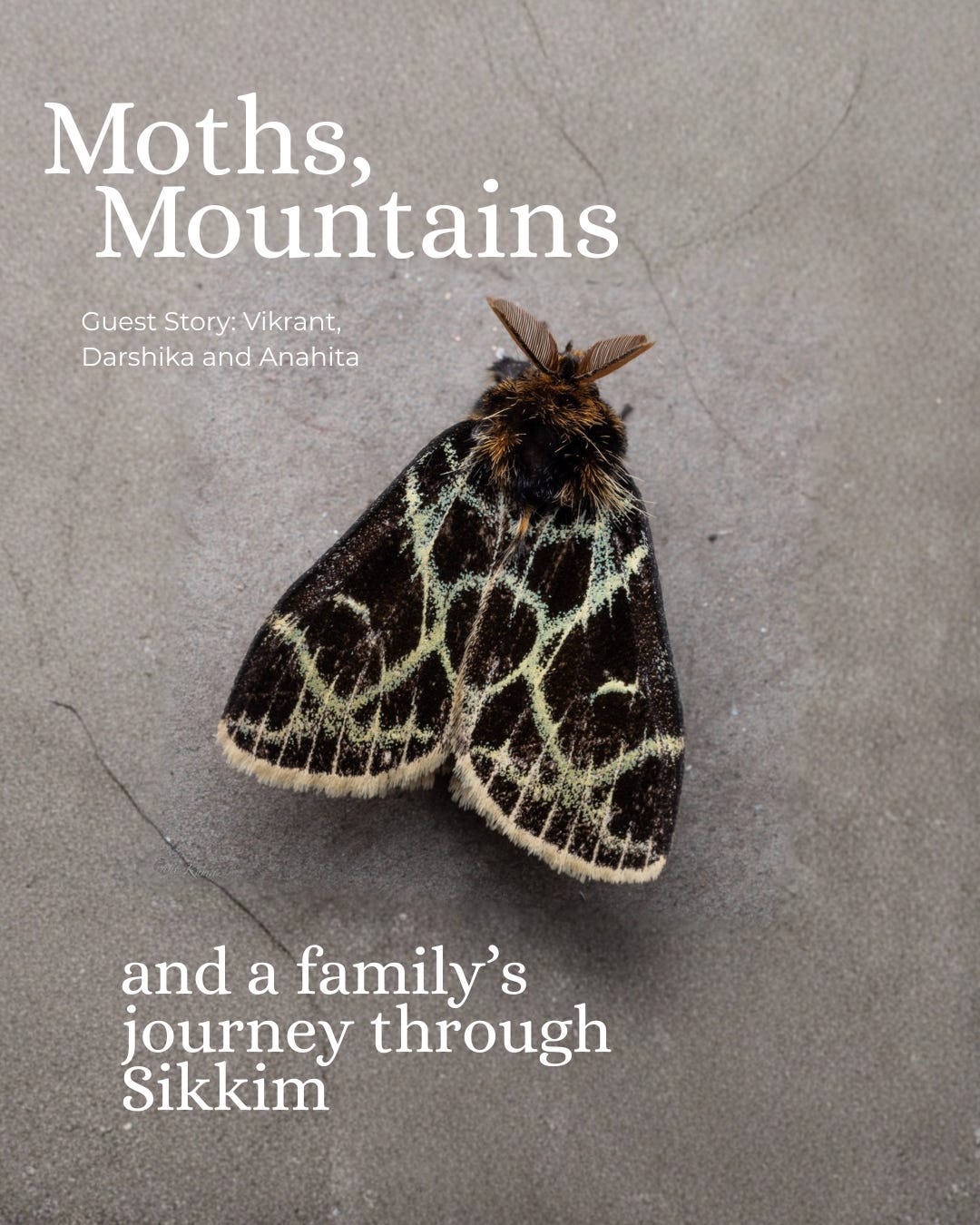
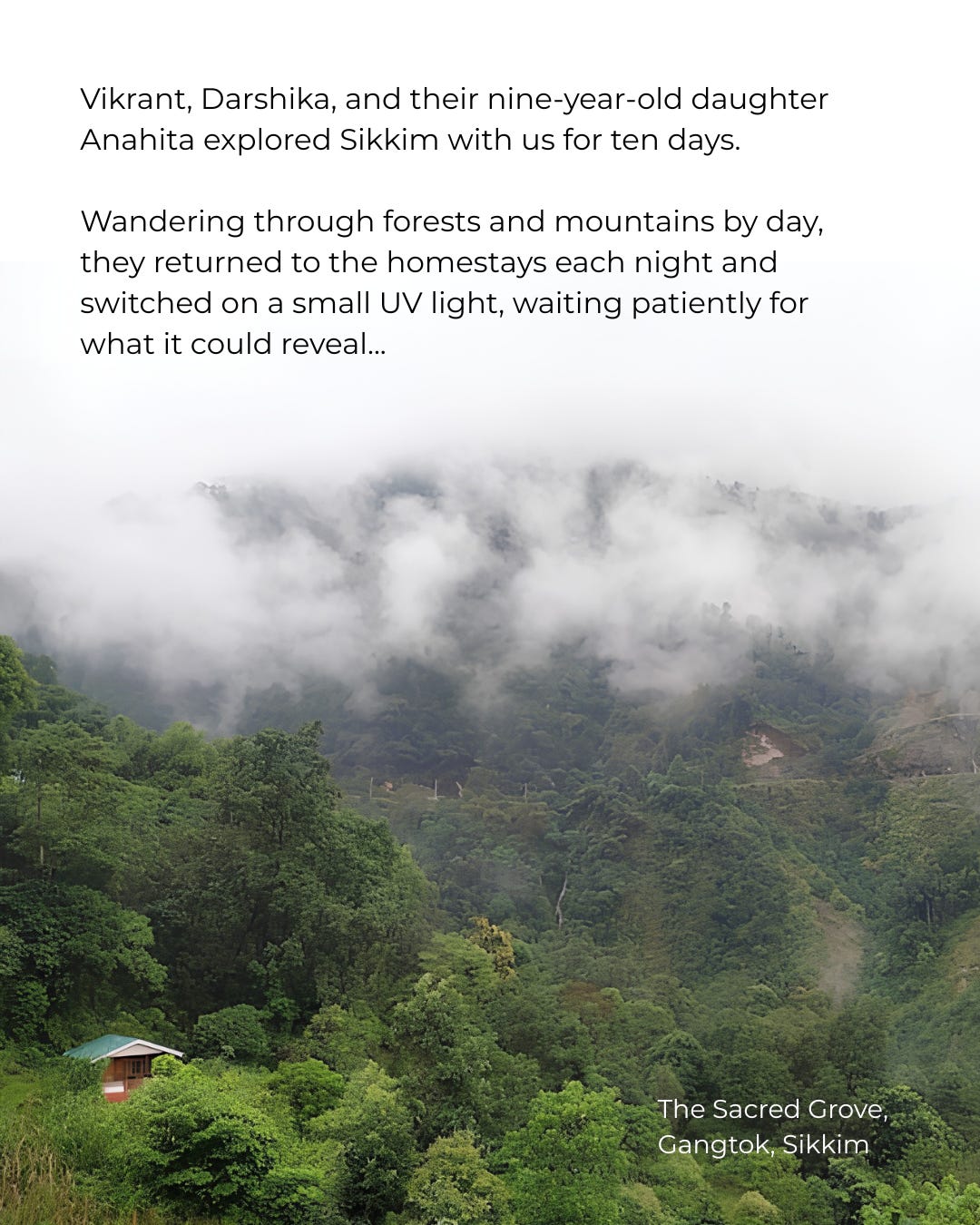
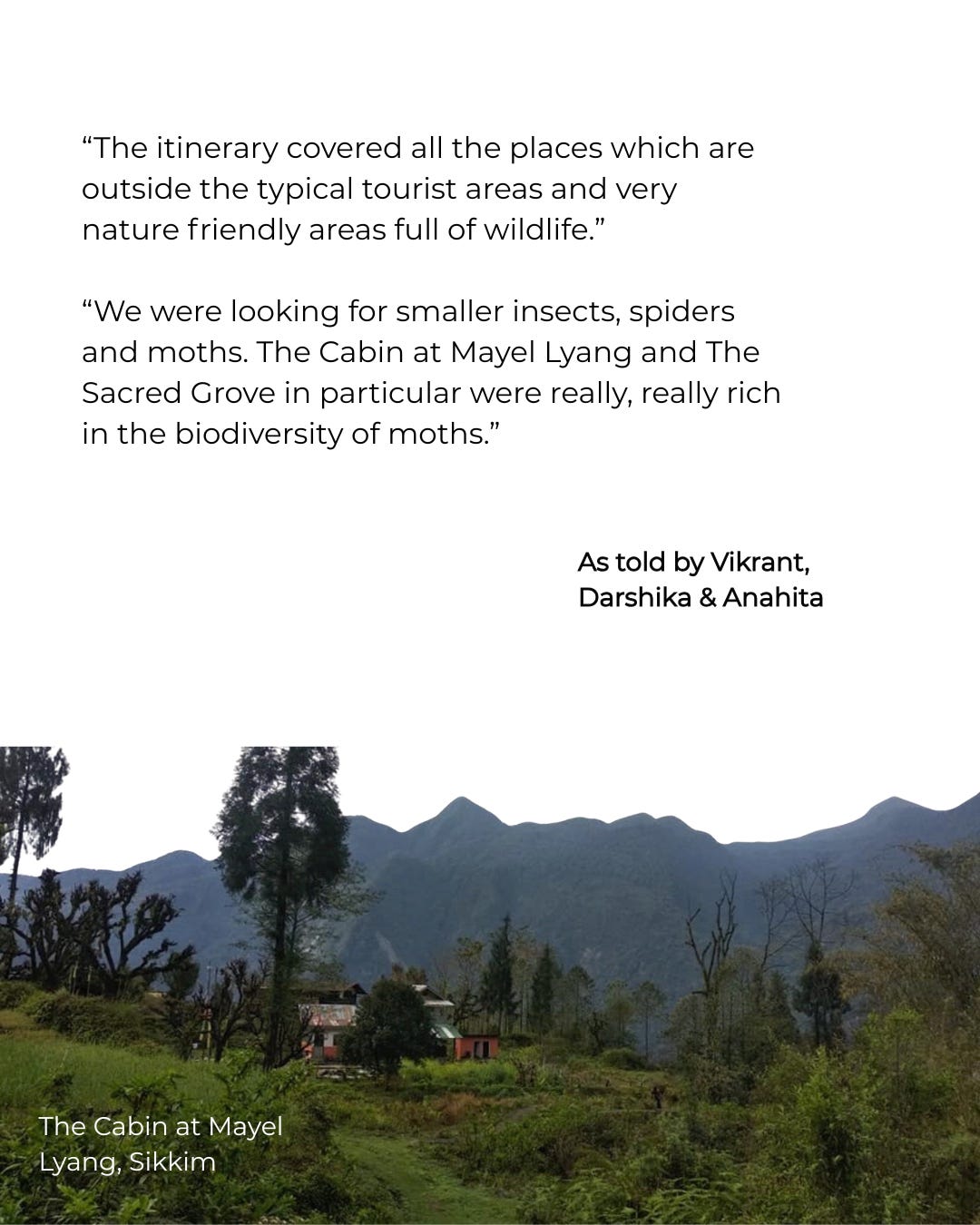
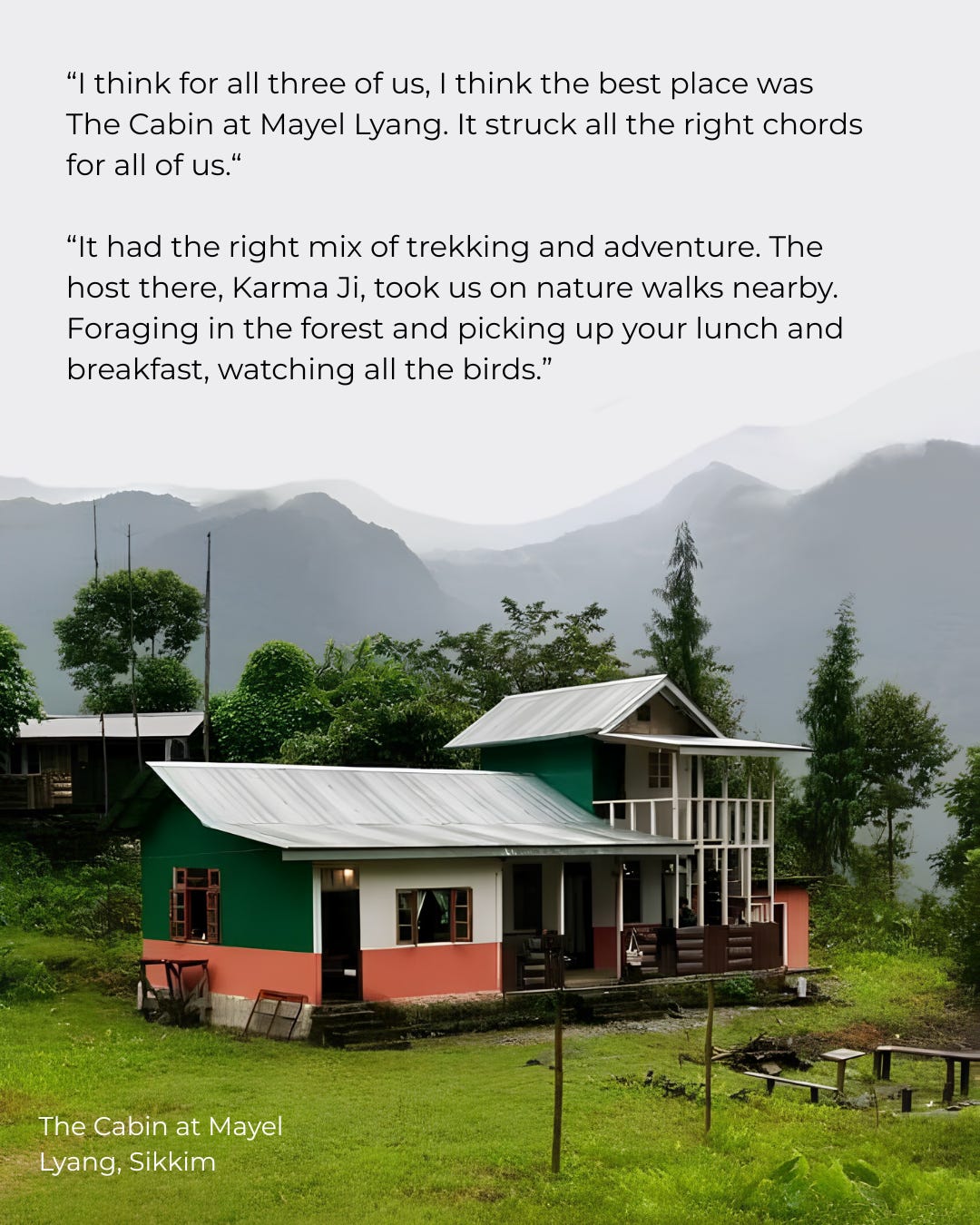
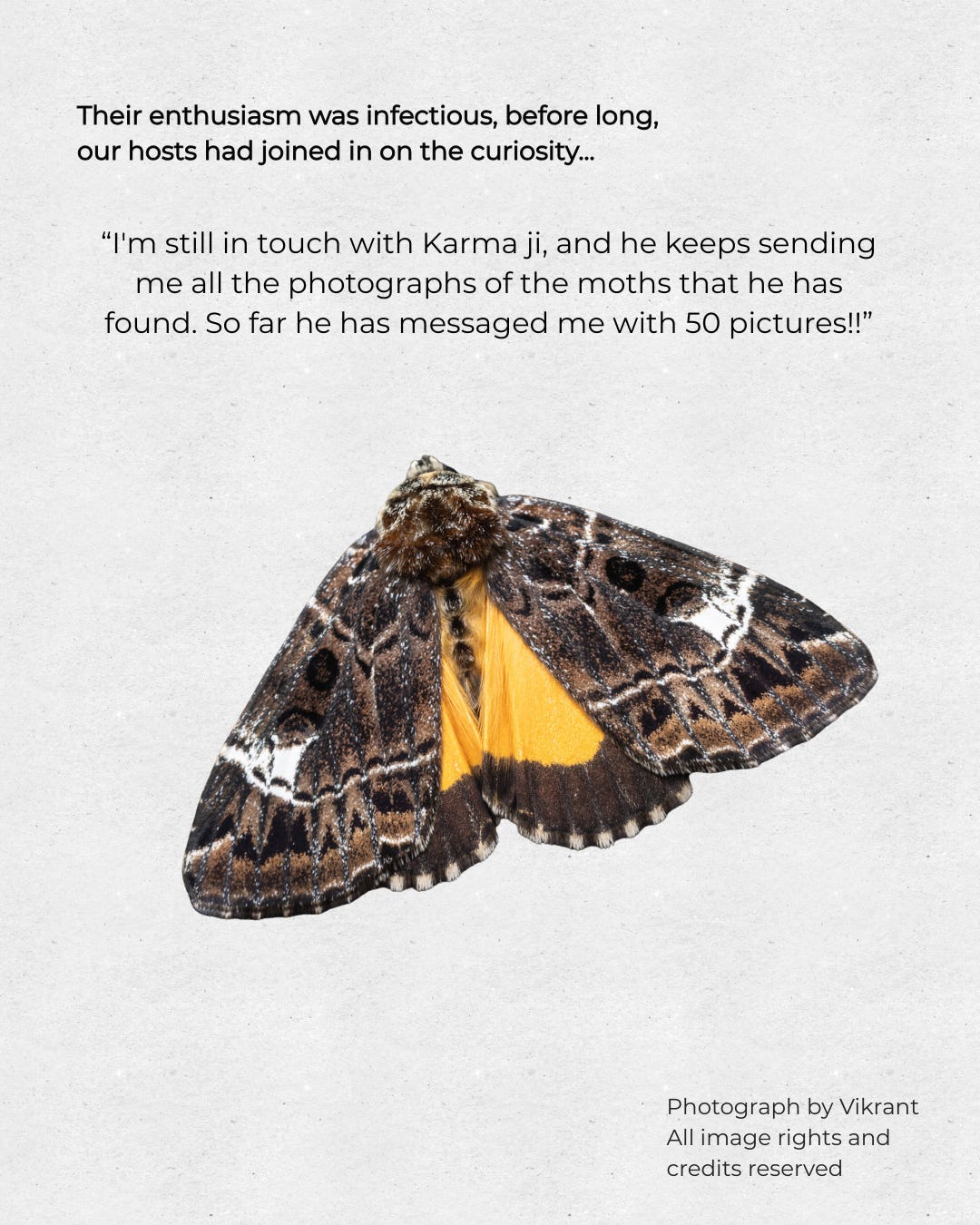
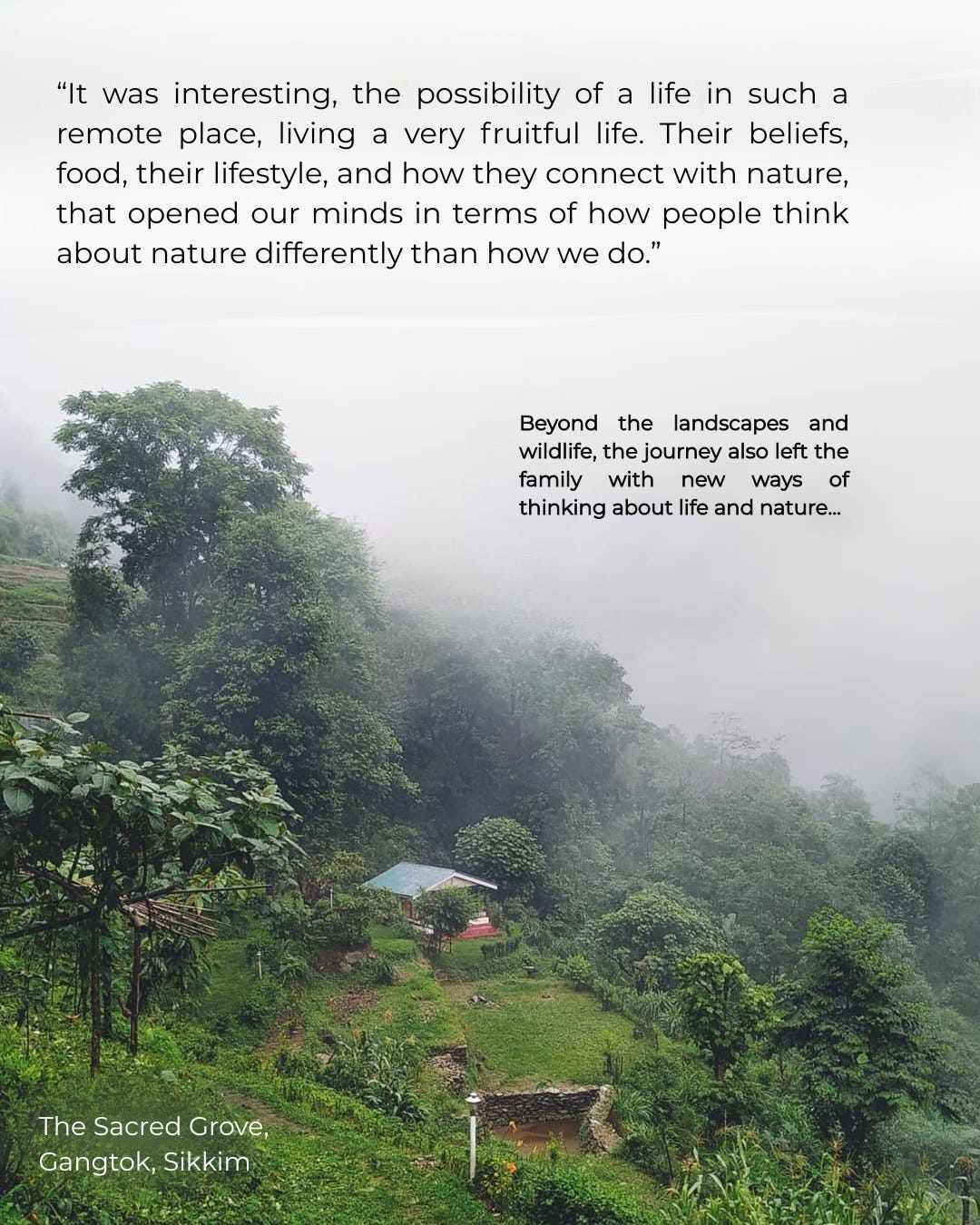
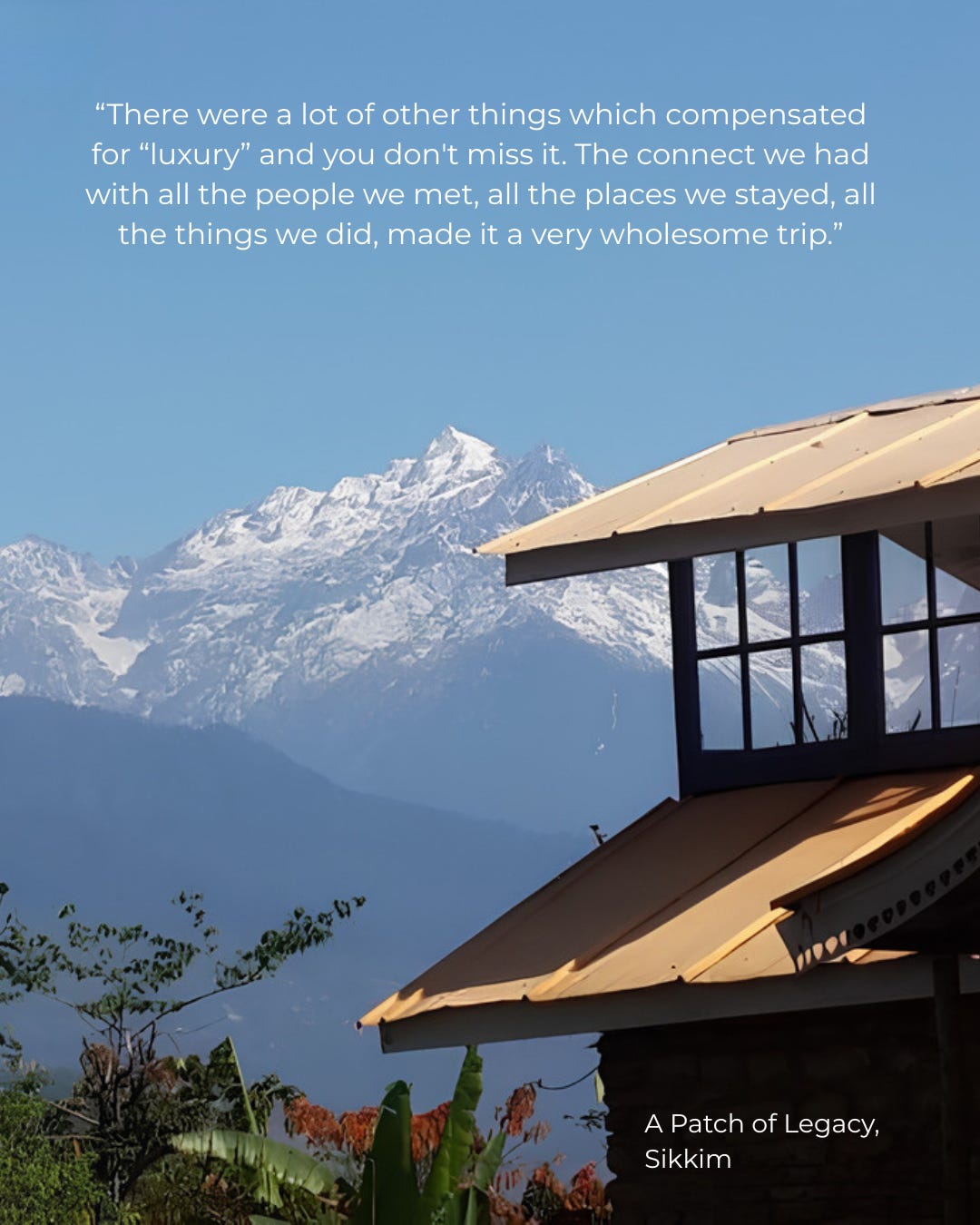
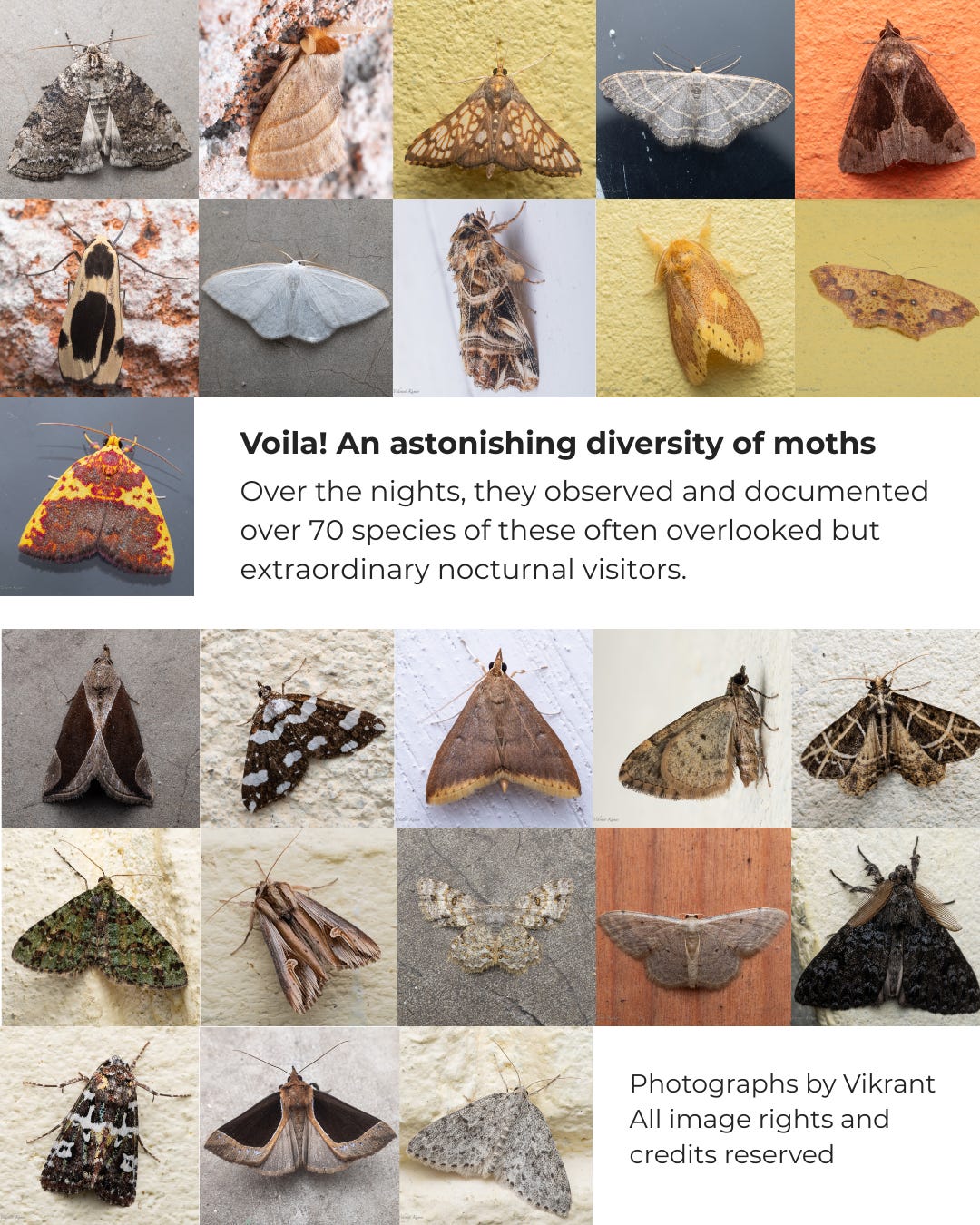
And interest need not be restricted to the familiar and playful, like dogs, the charismatic megafauna, like tigers, or even the aesthetically striking, like birds. Even at the smallest scales, life is ever inventive and blossoming. We are so lucky to have guests who are so deeply curious about all these kinds of lifeforms, and more…
Dhruv’s discoveries
Contact with wildlife can have a truly transformative effect. It may be in big, spectacular encounters, and it may be through a gradual softening of the heart.
Our very own and dear Dhruv comes from a sales background, but he was drawn to the travel industry by the opportunities to explore diverse places, cultures, and traditions. In his time with Knowhere Travel Co., what started as a curiosity for wildlife and nature at a surface level has grown into a deep admiration.
When we were putting down our notes for this newsletter, he shared a handful of moments from the beach, including seaside dogs…
…shorebirds…
…crows…
…and crabs…
Apart from these, there is much more; but even this little glimpse kind of goes to show that while beaches are not typically seen as ‘wildlife’ destinations, even a casual visit can be peppered with interactions with so many creatures…
Comic corner
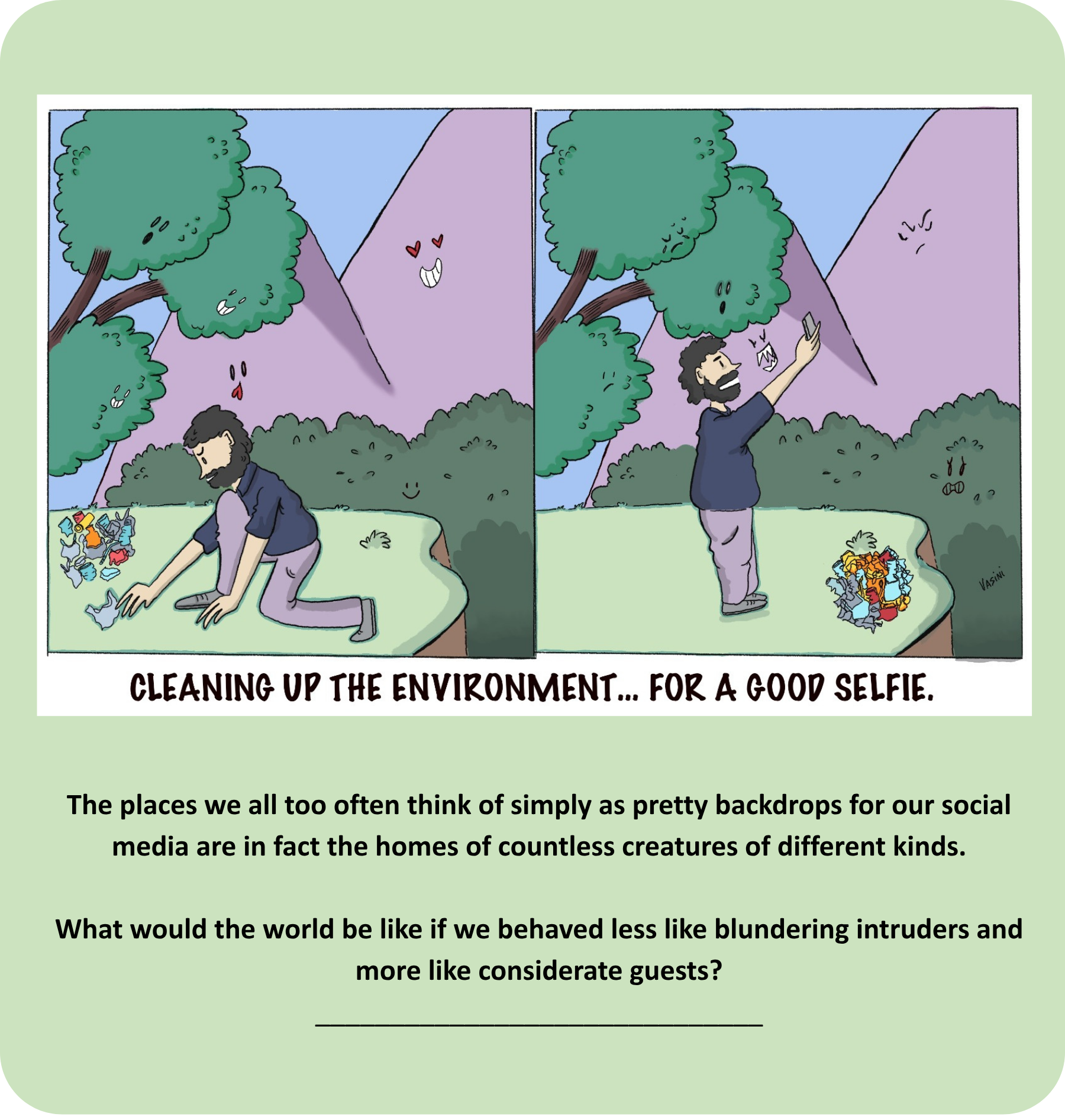
You can read the previous versions here: